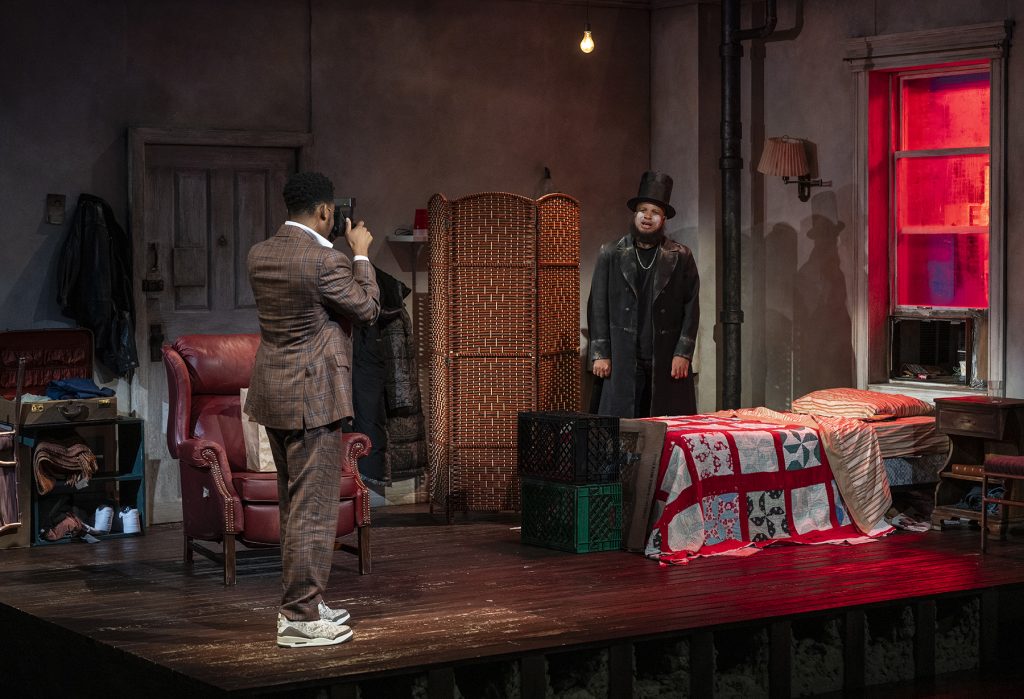
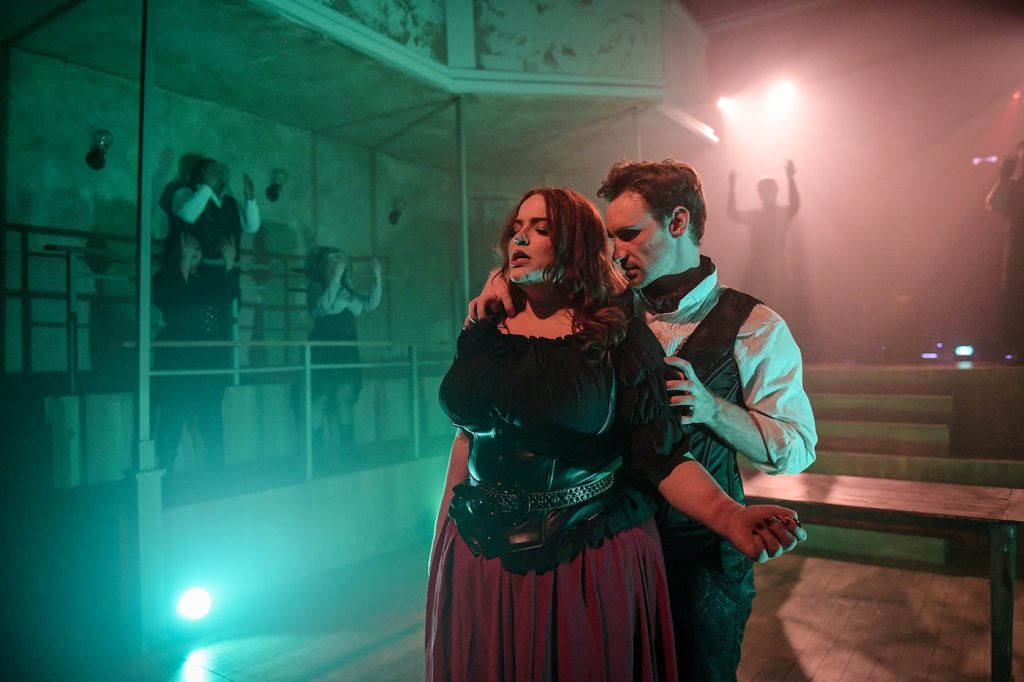
Steppenwolf’s “a home what howls (or the house what was ravine),” with Leslie Sophia Pérez, Eddie Torres, Charín Álvarez, Isabel Quintero/Photo: Michael Brosilow
RECOMMENDED
Is our modern infrastructure worth the cost of taking native people’s land and lives? The U.S.’s eye toward progress has created many ghosts that still haunt our collective consciousness, but sometimes these ghosts return with a vengeance—and they’ve got teeth!
Steppenwolf continues their series of plays for young adults with the premiere of “a home what howls (or the house what was ravine),” written by Matthew Paul Olmos and directed by Laura Alcalá Baker. Like the previous entry in the series, “Sanctuary City” (2023), the play follows a young person detached from their ancestral homeland and forced to navigate a cruel, foreign world where the odds are against them.
Soledad (Leslie Sofia Perez) is the daughter of displaced Indigenous Mexican Americans on a crusade to fight for the right of other Indigenous folk to maintain ownership of their homes and property. At a public works inquiry, she lambasts municipal representative Frank (Tim Hopper) by appealing to his feelings; but facts don’t care about feelings, especially when the facts are created by the State.
Soledad’s parents, Manuel (Eddie Torres) and Abrana (Charín Álvarez), cower in their ancestral home in fear of not only the government, but also from Coyotl (Isabel Quintero), a roaming coyote-spirit whose bark is as bad as a bite from her pointed fangs. Coyotl doesn’t care whether they are white or brown, Indigenous or colonizer, only that they are humans, and blames the entire species for stealing their land. As Manuel and Abrana are surrounded by the sounds of hungry howls, it becomes apparent that there are more ghosts lurking in the darkness, some more surprising than others.

Steppenwolf’s “a home what howls (or the house what was ravine),” with Tim Hopper and Leslie Sophia Pérez/Photo: Michael Brosilow
Parallels between the play and real life are uncanny. Soledad’s campaign to stop a freeway from being built through indigenous land mirrors the construction of the Eisenhower and Dan Ryan expressways, which displaced an estimate of 94,000 people, mostly Black and brown.
“Pardoname, do I look like a human to you? Am I a human being?” asks Soledad, articulating how rhetoric from people both politically conservative and progressive treats ethnic minorities as groups and not individuals, dehumanizing them even when they are trying to help.
Hats off to the production team for creating a somnolent and spooky world. Scenic design by Lauren Nichols sees a landscape of mountains and rivers painted to look as if we are viewing the area from high above the earth. Sound design by Peter Clare sets a spooky scene with ominous rumbling, eerie electronic feedback and 360° coyote howls. Lighting design by Lindsey Lyddan uses shadows to great effect, giving the feeling that a spirit might appear from any corner of the room.
Although the play is geared toward young adults, it provides entertainment and education suitable for everyone. “a home what howls (or the house what was ravine)” provides insight and representation to those who have been overlooked, paved over and forgotten, and it is another win for Steppenwolf.
“a home what howls (or the house what was ravine)” runs through March 2 at Steppenwolf Theatre Company, 1650 North Halsted. Tickets are $20-$30 and available at Steppenwolf.org.