• Skip to primary navigation
  • Skip to main content

Newcity Stage

Theater, Dance, Comedy and Performance in Chicago

  • Newcity Stage ·
    • About
    • Advertise
    • Privacy Policy
    • Newcity Network
  • Sections ·
    • Newcity
    • Art
    • Design
    • Film
    • Lit
    • Music
    • Resto
    • Brazil
  • Newsletters
  • Subscribe
  • Members Hub
Newcity Stage logo

The Naked Truth: A Review of Bertolt Brecht’s “Galileo” at Trap Door Theatre

by Mary Wisniewski | May 14, 2025

by Mary Wisniewski
May 14, 2025May 16, 2025Filed under:
  • Featured
  • Recommended Shows
  • Theater
  • Theater Reviews
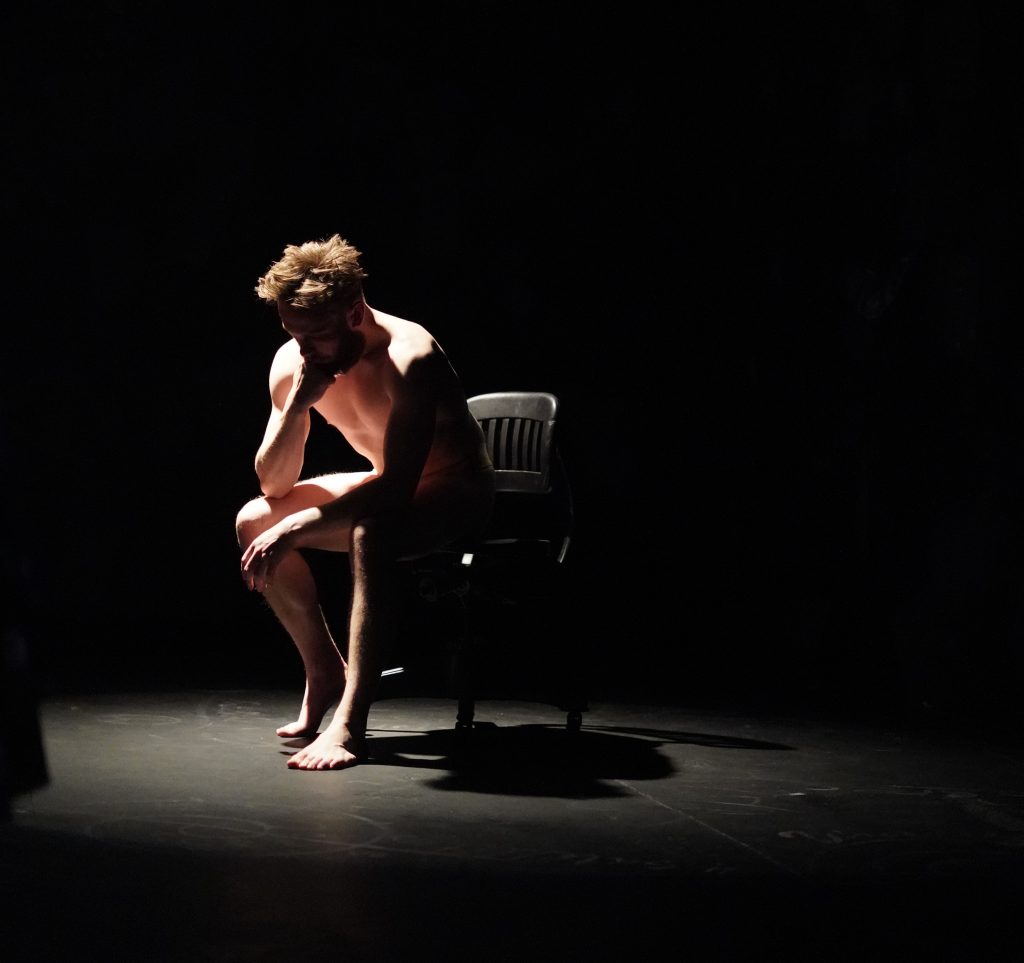
A man sits naked on a chair in a dark room with his head resting on his fist.

Trap Door’s “Galileo,” with David Lovejoy/Photo: J. Michael Griggs

RECOMMENDED

When audience members enter the Trap Door Theatre for Bertolt Brecht’s “Galileo,” they see a nearly naked man, sitting on a chair with his face to the wall.

They learn that the man is the scientist Galileo Galilei, played by Trap Door artistic producer David Lovejoy. Galileo’s nakedness represents his real self—a visionary who tells uncomfortable truths. As he makes compromises and literally contorts himself to please business and church leaders, clothing is added, to be taken off again when he returns to honesty.

It’s uncomfortable to be in a tiny theater with someone clad in just a narrow strip of cloth, and that’s as it should be. Galileo’s research, which upheld the Copernican theory that the Earth is not the center of the universe, made people uncomfortable. It took away their certainty that humanity is special in the eyes of God. In its unease with Galileo’s nakedness, the audience becomes complicit with the Inquisition—we want him to put clothes on and hide us from the truth.

Under resident director Max Truax, Trap Door offers a brilliant interpretation of this play—intelligent, gutsy and moving. Like other Trap Door productions, it is strange and surreal, with glowing television sets, the sounds of sitcom laughter, a woman in a blindfold and a backdrop made of sheets of dark paper covered with Galileo’s work. The scene design by Merje Veski, costumes by Rachel Sypniewski and sound by Dan Poppen help to create a feeling of both unreality and danger. But like the nakedness—the weirdness is not weird for its own sake but clarifies the play’s ideas about conformity and ignorance.

An actor in a suit gestures over a fuzzy TV while a woman behind him gestures and another man on the ground writhes.

Trap Door’s “Galileo,” with Dan Cobbler, David Lovejoy and Genevieve Corkery/Photo: J. Michael Griggs

As Galileo, Lovejoy is passionate though not always likable—it’s hard to be the smartest guy in the room. Galileo is a flawed man, fond of his comforts. He can be cruel to his daughter Virginia (played with heartbreaking innocence by Genevieve Corkery) and dishonest in his business dealings. But he doesn’t deserve his fate. The play (translated by Charles Laughton) offers a parable about the role of scientific discovery in the world—if you’re going to offer something new, you’d better make it profitable, and you’d better not upset the people in charge.

The cast for the production is strong throughout, making this intellectual script lively and clear. The ensemble includes Dan Cobbler, who plays the Curator with a knowing, grinning cynicism—he’s a glad-handing populist who turns on Galileo when he fails to serve. Another standout is Amber Washington as a monk who accepts Galileo’s teachings. She gives a touching speech about how his views could unsettle the peasants, whose misery is relieved only by their faith.

Brecht wrote this play in 1938, five years after he fled Germany and the Nazis burned his books. His views on power are blunt—you can be clever, and you can be right, but even a brave man may surrender when shown the instruments of torture. “Galileo” is a reminder that in an autocracy, the truth is no defense.

“Galileo” runs through June 14 at Trap Door Theatre, 1655 West Cortland. Tickets are $31 plus fees, available at trapdoortheatre.com.

Tagged:
  • Amber Washington
  • Bertolt Brecht
  • Charles Laughton
  • Dan Cobbler
  • Dan Poppen
  • David Lovejoy
  • Genevieve Corkery
  • Max Truax
  • Merje Veski
  • Rachel Sypniewski
  • Trap Door Theatre

Post navigation

Previous Post Everything is in the Soup! A Preview of Hubbard Street Dance Chicago’s Spring Series at Harris Theater
Next Post A Night Filled with Spirit(s): A Preview of “Gender Play, or What You Will” at Steppenwolf 1700
Seven actors on stage, some standing and some kneeling, appear engaged in a dramatic scene. One woman with red hair gestures passionately, while others look at her intently. A cross and simple set pieces are in the background.

“The Man Who Fell With the Rain” Sells an Angel for Parts Trap Door Theatre puts on a simple yet powerful play based on a short story by magical realist master Gabriel García Márquez that makes one wonder if there's anything humans won't exploit.

Mary Wisniewski September 10, 2026
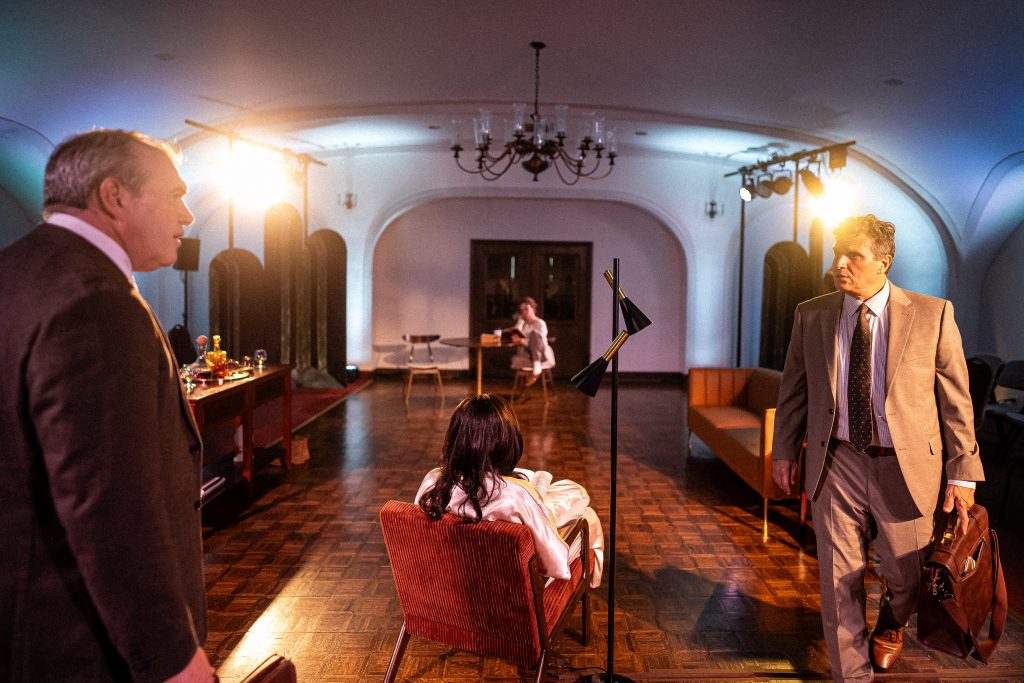
Two men in suits stand in a room with arched ceilings, facing a seated woman. Another person sits in the background at a table. The scene is dimly lit with lamps and chandeliers.

Gift Theatre’s “Marble” Starts Strong Before Going Cold and Hard Endings are never easy, but rarely does a play that begins so well move so decisively in the wrong direction as does Marina Carr’s 2009 work, an Irish dramedy that’s almost salvaged by a quartet of powerful performances.

Hugh Iglarsh August 7, 2026

Too Much Farce, Not Enough Force in This Version of “The Importance of Being Earnest” Sight gags go Wilde in No Dogs in the Kitchen Theatre Company’s revival of the classic comedy, overwhelming the play’s trenchant commentary on Victorian social mores.

Hugh Iglarsh July 15, 2026
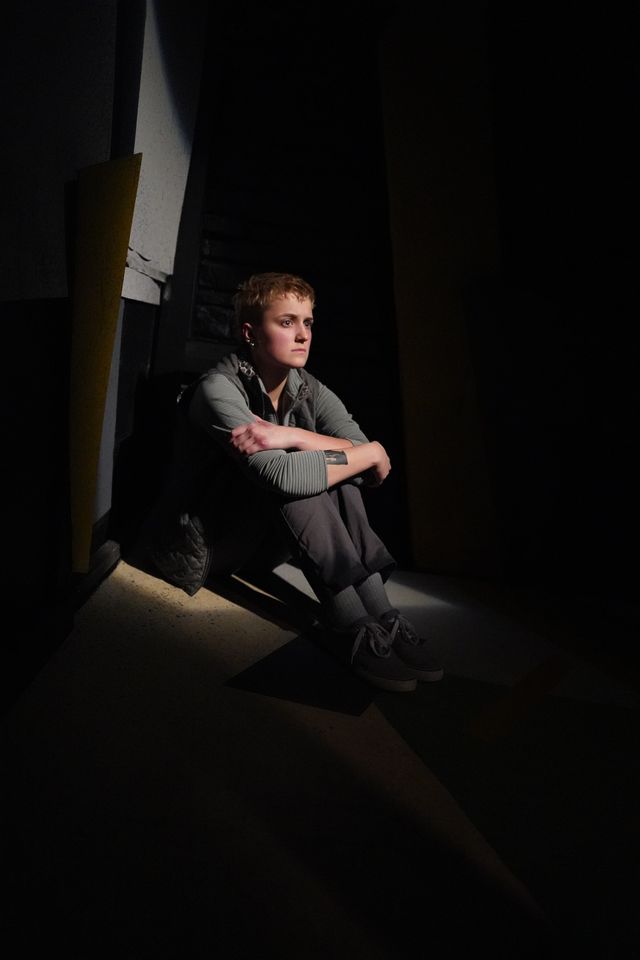
A person with short hair sits on the floor in a dimly lit room, hugging their knees to their chest and looking thoughtfully into the distance. Shadows and light create a dramatic effect around them.

“Green Corridors” Tells the Story of Ukrainian Displacement in a World Gone Mad Trap Door Theatre presents Ukrainian playwright Natalka Vorozhbyt’s uncompromising take on Russia’s ongoing brutalization of Ukraine as seen through the experiences of a group of refugees in Vienna.

Noel Schecter January 26, 2026

A magazine cover split vertically: the left half shows wood grain, the right half shows a mans face and neck. NEWCITY and OCTOBER 2021 appear in yellow text at the top right.

October Issue
Realism

GET A COPY

SUBSCRIBE

White text in all capital letters on a light gray background spells NEWCITY..
Facebook Twitter Instagram
  • About
  • Privacy Policy
  • Advertise
  • Subscribe
  • Newsletters
  • Chicago Film Project

Copyright Newcity Communications, Inc. © 2026