

Chicago Opera Theater’s “Der Silbersee”
In October 1978, when I was a college junior in New Jersey, a friend with a connection arranged for me and others to go to Lincoln Center to hear the American premiere of a Kurt Weill piece. I cannot remember which one. I knew Weill’s music from the jazz covers of “Mack the Knife” (Ella Fitzgerald) and “Speak Low” (Bill Evans) in my dad’s LP collection; I also knew Weill’s work from the gut-wrenching 1974 film adaptation of his musical about South African Apartheid, “Lost in the Stars,” the title song of which remains, to me, the saddest and most beautiful tune in all American musicals.
Weill, a brilliant and socially potent Jewish composer who fled Nazi Germany, was a revered figure in our home. Not just for his dark, tuneful, infectious German scores, but also for his successful adaptation to American song idioms once he arrived in the United States. My musical family had also fled a menacing Europe, and to my father’s generation, Weill was a beau ideal. So was his famous wife, the legendary singer, actress and muse, Lotte Lenya.
The Lincoln Center concert was on the great lady’s eightieth birthday, and my friend thought Lenya would be there. I remember liking the music and waiting for her to appear. During the ovations, my friend came over and tapped the shoulder of the woman sitting in front of me to say hello. It was Lenya, who turned back and smiled. My friend asked me whether I knew she was inches from me all along. Lenya shook our group’s hands and made her way to the stage for more applause. She had been Kurt Weill’s most important champion for decades and was clearly delighted with the premiere.
I did have one question for the legend that I was too starstruck to ask. How was it possible, I wondered, that major works by Kurt Weill, who died at fifty in 1950, were still unperformed in the United States? That they were still waiting for their premieres? To me, that was like learning there was a book of the Hebrew Bible that had yet to be translated. Well, as I learned from Lawrence Edelson, the general director of Chicago Opera Theater, there are scads of Weill music that, even nearly half a century later, have yet to have their due in the United States. Edelson is directing his company’s production of one neglected masterpiece, “Der Silbersee,” in its first full and faithful U.S. production.
“Der Silbersee,” which has had a robust history of performance in Europe, may have been overlooked because of its length (nearly three hours); its innovative form that mixes opera, musical theater and straight drama; and because it features long runs of spoken dialogue, in German. (At COT, supertitles will translate everything.) Weill’s well-known “The Threepenny Opera” shares these qualities, though English-speaking audiences usually see a truncated version sung and spoken in English.
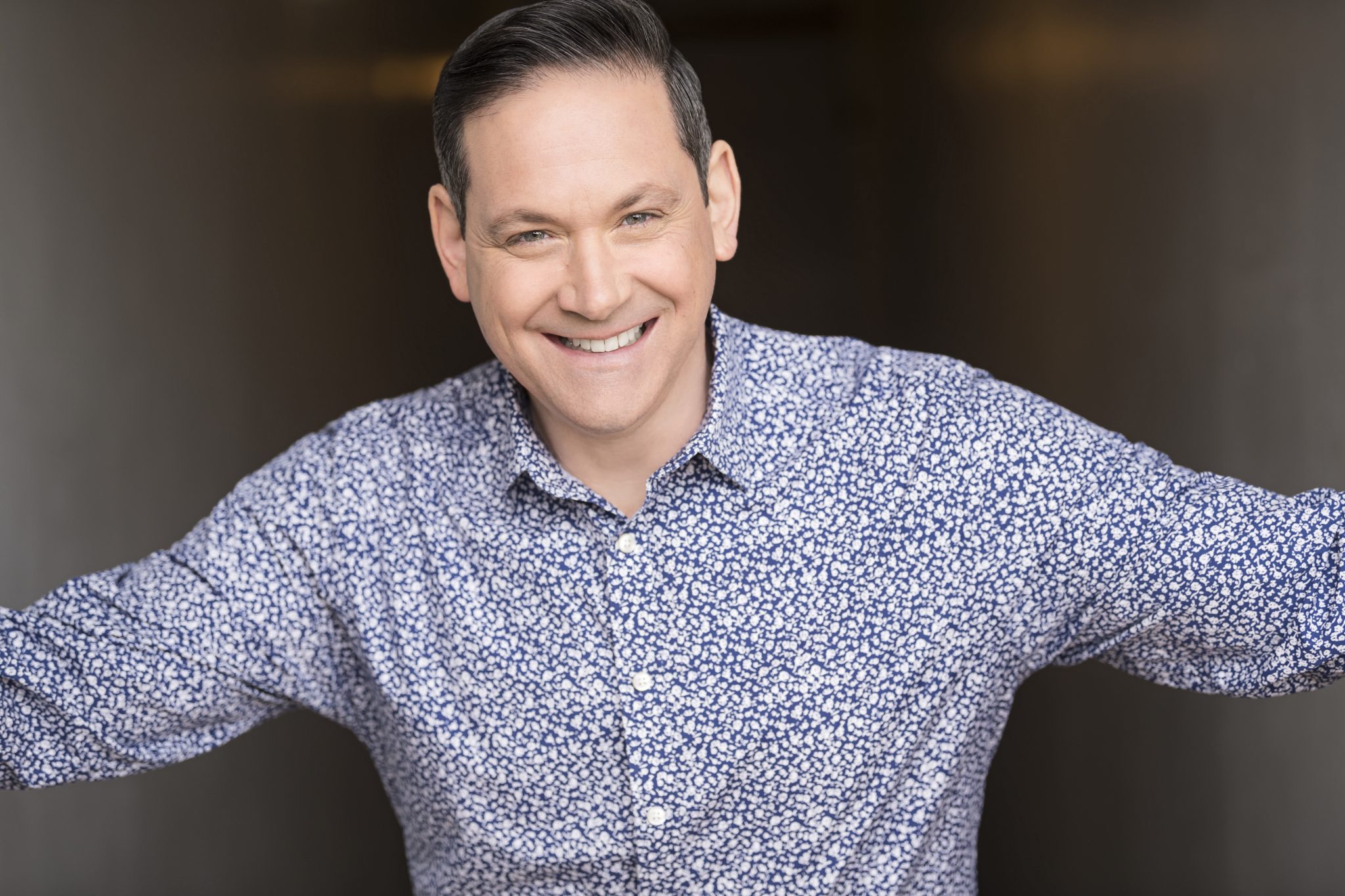
Lawrence Edelson
Edelson has been working toward this production for years. He’s been committed all along to presenting it as Weill and his collaborator, Georg Kaiser, wrote it. “One-hundred percent of the original music is there,” the director says, “but we have trimmed some of the dialogue scenes just to help the pace move forward for a contemporary American audience.” Previous passes at the work in the United States had resorted to slashing the book, adding underscoring from other of Weill’s works or rewriting the libretto altogether.
“Der Silbersee” deserves better and is now getting it. The score is at turns fun, chilling, intimate and huge. (A vintage recording of which is available on Internet Archive). Lotte Lenya starred in one of the original German productions in 1933. Weill and Kaiser, already under pressure from Nazi censors, opted to open the work in multiple German cities to outrun them. They could not, and in all, the show only had sixteen performances before it had to quit. Weill, labeled by the Nazis as a “degenerate” and under threat, left Germany shortly thereafter. Lenya’s role, the good-hearted, rootless, ethereal Fennimore, is played at COT by the wonderful Chicago soprano Ariana Strahl. Don’t expect a Lenya tribute, however. Strahl, who has lived and performed widely in Germany, will bring that experience, along with her bright, warm and agile voice to a dimension all her own.
Edelson promises his slight redaction of the dialogue leaves intact the exchanges that were “politically charged and socially relevant” in both the 1930s and the United States today. The action of “Der Silbersee” begins with a robbery gone bad. A policeman shoots and wounds one of the robbers, who has taken a pineapple from a shop. Then, a few fantastic turns of events, the policeman ends up owning a castle and caring for his victim. A series of lawless betrayals follows. They are less-than-oblique references to the rise of the Nazis and their use of lawlessness as an instrument of state power. And to the party’s money-grabbing rule. Without detracting from the high drama of the piece, Weill and Kaiser interlace the moral conflicts facing Germans in the 1930s.
“This is a piece that’s dealing with wealth inequality, with the abuse of state power, the excessive force by police, the rise of fascism,” Edelson says. “These are things we’re feeling very much in the United States today.” Edelson adds, however, that the work was also keen on offering audiences a look to a brighter, freer future. “The piece is imbued with hope throughout, and that’s something we desperately need right now.”
Of course, there’s also Weill’s singular, powerful music, by turns jarring and transcendently gorgeous. This is a big production that promises to deliver something new to an American audience, but long in coming. Lotte would be delighted.
Chicago Opera Theater’s “Der Silbersee: Ein Wintermärchen” (The Silver Lake: A Winter’s Fairy Tale) runs on March 4, 7 & 8 at Studebaker Theater, 410 South Michigan. Tickets and information here.


