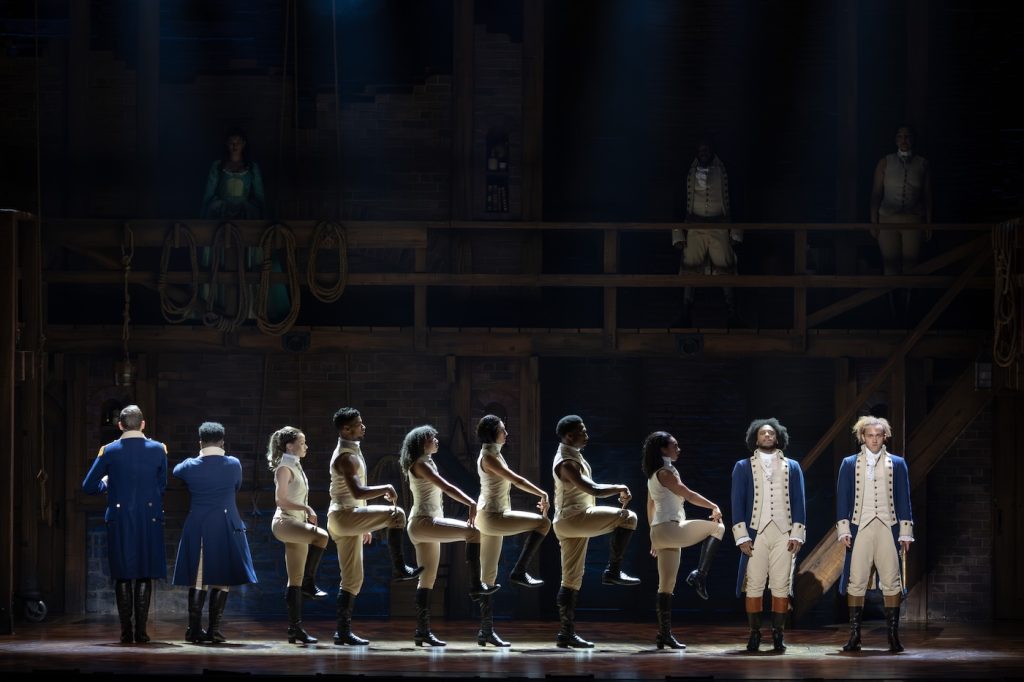
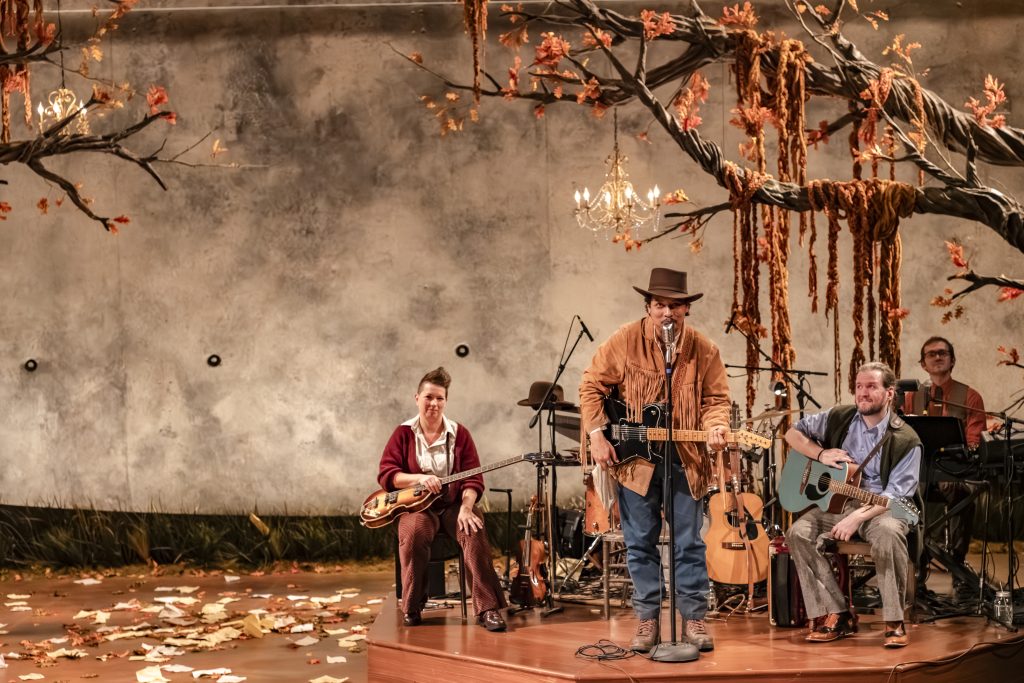
Broadway in Chicago’s “Suffs”/Photo: Broadway in Chicago
RECOMMENDED
The organized activism behind women obtaining the national right to vote took seventy-two years. First proposed in 1848, the ratification of the Nineteenth Amendment occurred in 1920.
That decades-long, multi-generational struggle culminated over a century ago, so what is there to learn from the story of how suffragists, or suffs, got there?
Everything, as it turns out.
First, few of us know the story, regardless of gender. Even Shaina Taub, the writer of the musical’s book, music and lyrics, didn’t know the history of the suffragist movement until a decade ago, when producer Rachel Sussman suggested she write a suffragists’ musical.
Second, the struggles that suffs went through are much the same struggles that any organized attempt to make major societal changes go through now, as then.
Do we make change gradually and politely, or abruptly and aggressively?

Broadway in Chicago’s “Suffs,” with Maya Keleher/Photo: Broadway in Chicago
“Suffs” opens with the polite “ladylike” old guard represented by Carrie Chapman Catt—played by Marya Grandy—confronted by impatient let’s-get-this-done-already new guard Alice Paul, played by Maya Keleher.
The dialogue could well be right out of the current Democratic Party’s centrist versus go-left debate, over how best to dislodge three branches of government stuck in radical right mode.
Once Paul decides to take the more radical step of organizing the first-ever Washington D.C. protest march, the two go their separate ways—though it will be Paul’s civil disobedience combined with Catt’s lobbying that will ultimately turn the tide.
All of this is communicated in a series of songs that manage to inspirationally reflect the drama occurring as well as the inner feelings of the characters.

Broadway in Chicago’s “Suffs,” with Danyel Fulton/Photo: Broadway in Chicago
When Chicago journalist Ida B. Wells, played by Danyel Fulton, is told she and other Black Americans will have to march in the back as to not offend Southern marchers, she lets go with a show-stopping powerful response: “Wait My Turn.”
Paul has an introspective moment in in the soliloquy “Worth It,” where she reflects on all she is giving up to advocate for the cause and contemplates what her own mother gave up to raise her. The song is then taken up by her colleagues.
There is song after song like this: arias, duets, ensemble numbers that include male characters—even President Woodrow Wilson (understudy Merrill Peiffer on opening night)—though all portrayed by women or nonbinary performers singing in the upper female range with extraordinary power and heart.
Think the history and intensity of “Hamilton” combined with the communal and period feel of “Ragtime,” with the ups and downs and intimacy of the female-friend journey of “Wicked.”
“Suffs” is an inspiring show for all, but for those who still experience the underbelly of female inequality, a cathartic one. Many women in the audience were reduced to tears on opening night.

Broadway in Chicago’s “Suffs,” with Marya Grandy and Maya Keleher/Photo: Broadway in Chicago
The show takes us into Paul’s last years in her nineties during the nation’s seventies when she, in effect, had become the conservative voice in pushing the Equal Rights Amendment (ERA). Paul wrote the amendment, which infamously was never ratified before its 1982 expiration date.
That idea of looking back on the fruit of what is possible when uniting behind a cause—yet forging ahead because the struggle remains real and ongoing—is crystallized by the characters of the past reuniting, very movingly breaking the fourth wall for a rousing finale with the killer power anthem of “Keep Marching.”
“Suffs” at CIBC Theater, 18 West Monroe, through July 19. Tickets available at: broadwayinchicago.com