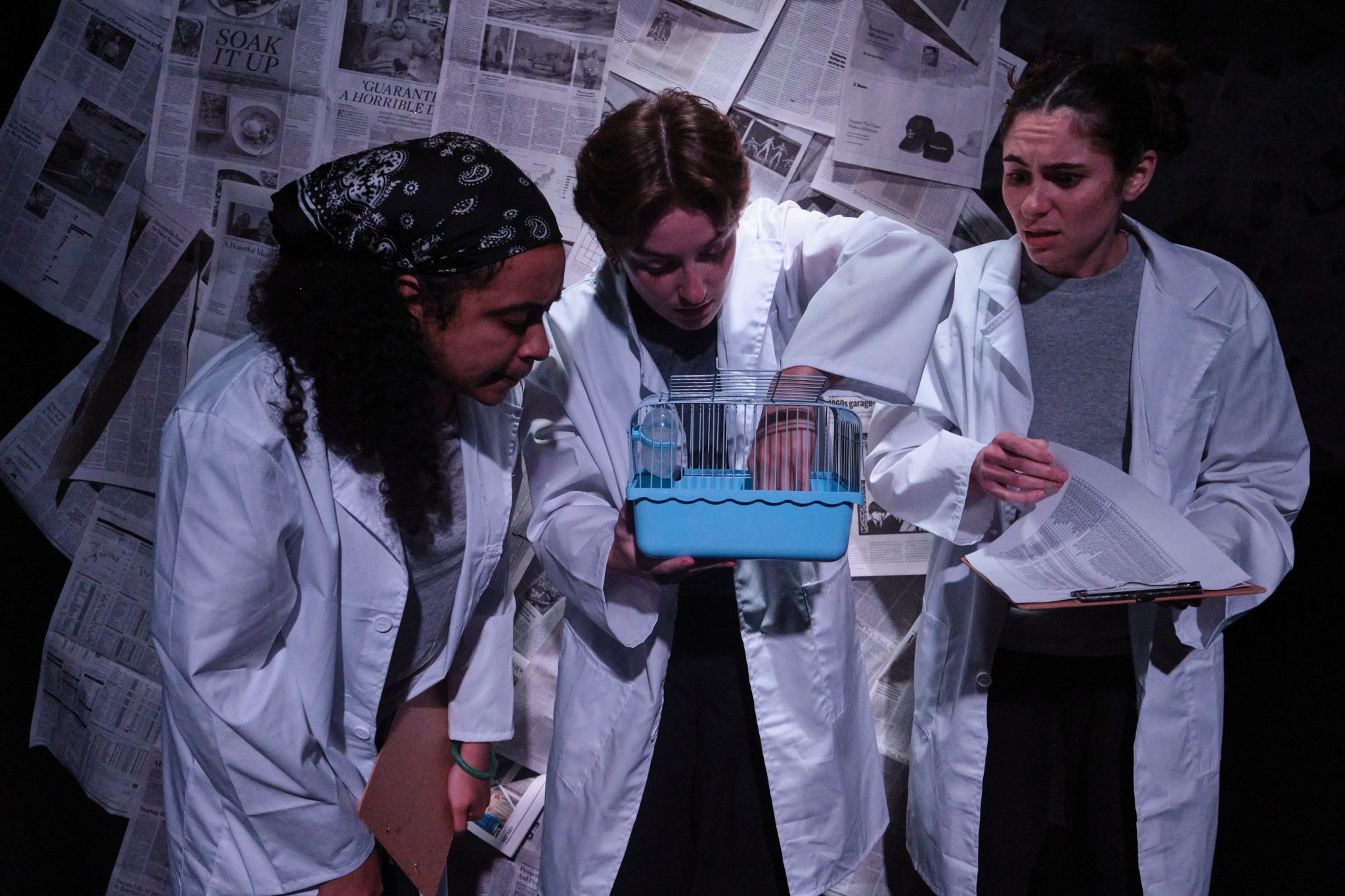
Sierra Phan, Z Mowry and Katie Bevil from “Fellow Mortals” by Aurora Real de Asua and directed by Janyce Caraballo/Photo: Joel Maisonet/Maisonet Photography
The Living Newspaper, pioneered by the Federal Theater Project under the helm of Hallie Flanagan in the 1930s, was a project of the Works Progress Administration, part of a push to employ artists in the wake of the Great Depression. This revolutionary theatrical form has made it to 2026 with the help of Jackalope Theatre, who presented their Seventeenth Annual Living Newspaper Festival at their home in Edgewater’s Broadway Armory Park this past weekend.
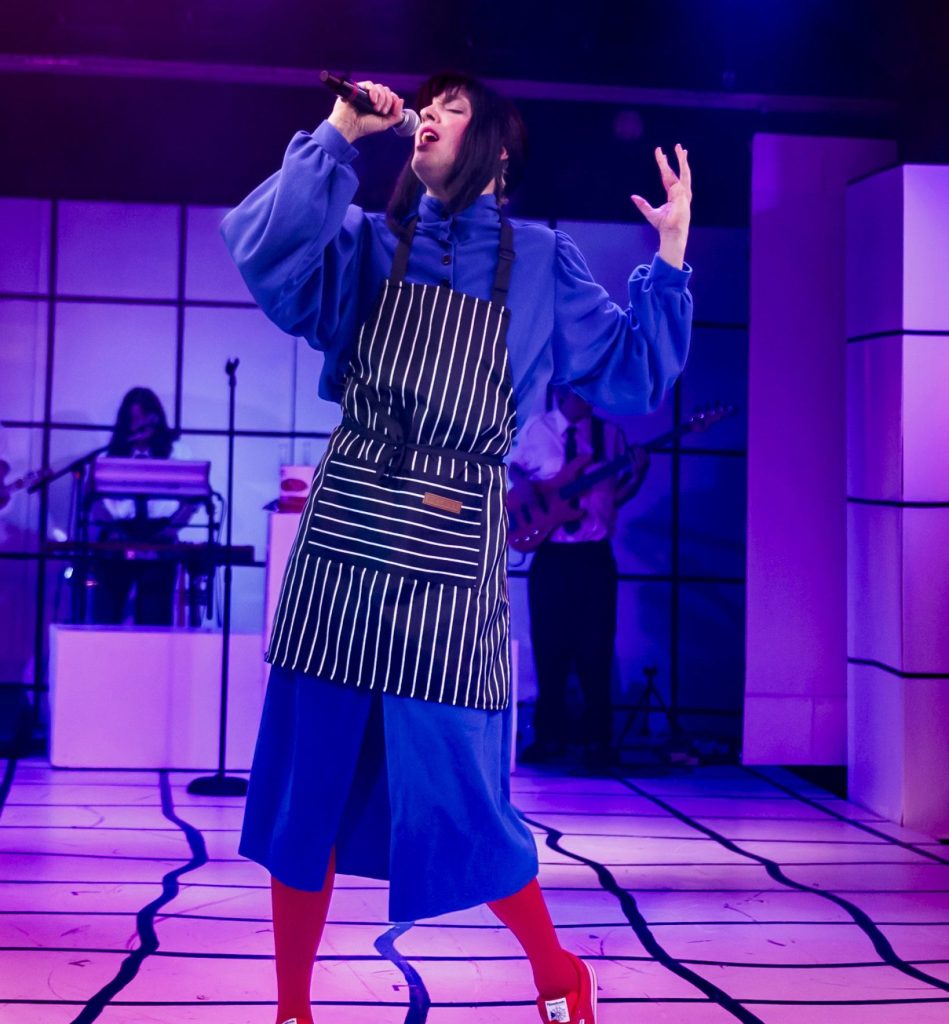
Taking cues from Flanagan’s theater as well as contemporary sketch comedy, Jackalope’s Living Newspapers are a means of reflecting on our frenetically changing world on stage. Transitions between the five plays are accompanied by filmed commentary from two news anchors played by Mary Williamson and Wes Needham, blending the plays’ themes with bits and absurd musings.
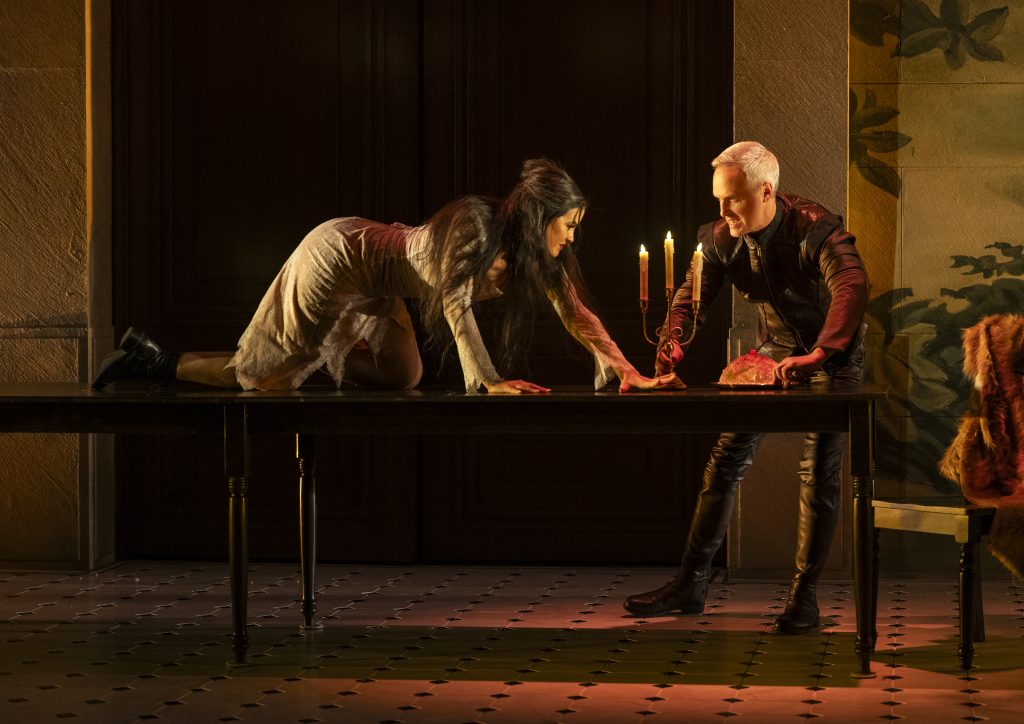
Covering topics from close encounters to red-pilled conspiracies regarding Jeffrey Epstein to the rampant proliferation of GLP-1 inhibitors, all five plays are inspired by real news articles (all of which are cited in the show’s broadside-style program as well as on Jackalope’s website).
The prevailing theme of these plays is the way that Americans desperately search for meaning in an era where we are increasingly atomized and isolated by forces beyond our control, whether that’s conspiracy, “optimization” or bullheaded scientific advancement (as is the case in Aurora Real de Asua’s “Fellow Mortals,” inspired by a Japanese lab’s attempt at recloning mice).
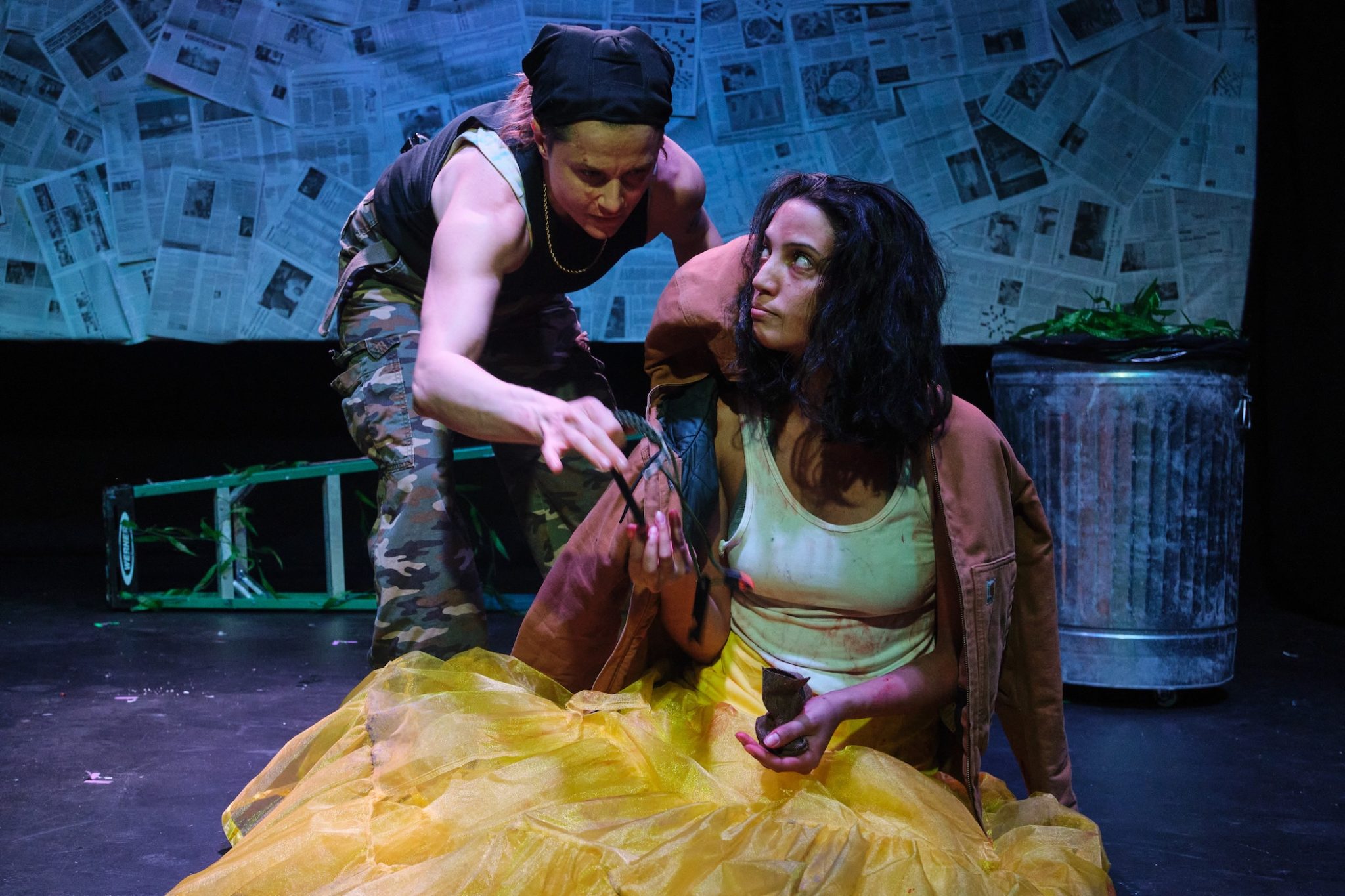
Morgan Lavenstein and Jalbelly Guzman from “The Turning,” by Netta Walker and directed by Sydney Charles/Photo: Joel Maisonet/Maisonet Photography
The methods of control, like Pete Hegseth’s removal of women and Black service members from Navy promotions, the inspiration for Netta Walker’s “The Turning,” are brutal, but if we can find community in forums like the one frequented by Clark in Ike Holter’s “The Day the Night Came Down,” we can have some control over our conditions.
As is frequently the case with short plays, I found myself wanting some elaboration on what I saw in Jackalope’s Living Newspapers. The best I can hope for is that these playwrights expand on the work here. The results may end up as full-length plays, canny commentaries on the weirdnesses of our times, how we cope and whether that hurts or harms.